Trial Deposition Preparation Timeline
· TrialBase
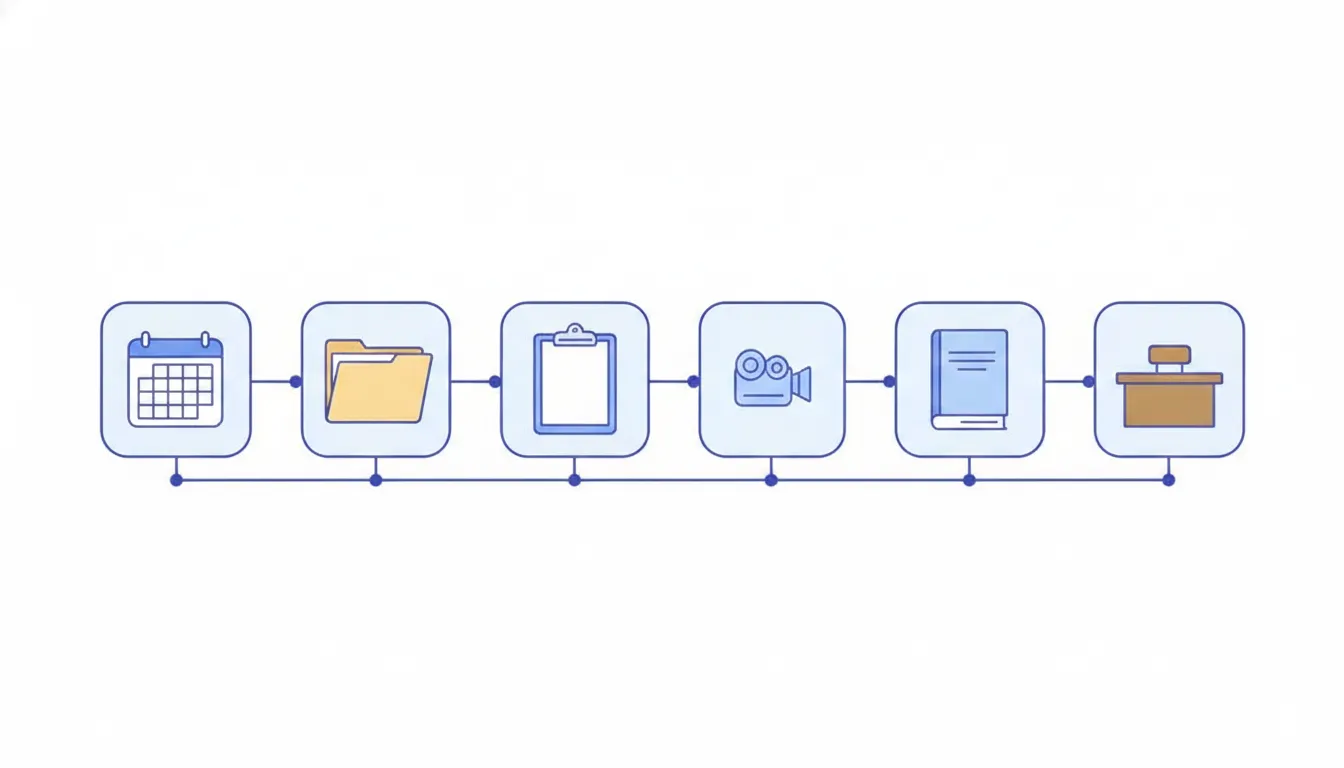
A trial deposition preparation timeline is the calendar a plaintiff firm uses to turn one noticed deposition into testimony it can still use at trial. It is not a witness script, a software comparison, or a reporter price sheet.
For a two-to-twenty-five attorney personal injury practice, the useful version names an owner for each window. It also names the file that must exist before the next window starts, and a stop check when that file is missing. Federal Rule of Civil Procedure 30 is the baseline below. State notice periods differ, so this timeline does not replace a jurisdiction guide.
What a trial deposition preparation timeline is for
Partners ask for a timeline when a deposition date is already on the calendar and the file is not ready for it. The question is practical. What has to be true six weeks out, three weeks out, and the week of testimony? What has to be true the day of, the week after, and when that testimony is used at mediation or trial? A checklist of tasks does not answer it. A checklist can be finished out of order. A timeline cannot.
The reader this page is written for is a managing partner or a founding attorney at a plaintiff personal injury firm. The second reader is the person who will run the calendar: a litigation paralegal, a case manager, or an office manager.
The firm handles auto, premises, product, and some mass-tort work. It does not have a national reporting contract or an in-house litigation-support department. One person often owns scheduling, exhibits, and the witness meeting. The timeline has to be short enough to post on a matter, and strict enough that a partner can see a miss before the reporter is in the room.
Search results for deposition preparation are mostly witness tips, first-deposition advice, and generic checklists. Those pages help a lawyer who has never taken a deposition. They do not help a firm that takes them every week and still loses the week before because records, the outline, and the notice are owned by three different people. This article stays on that firm calendar.
The job this timeline does not do
Several neighboring jobs already have their own pages. Linking them is the point. Restating them would bury the calendar.
- How to build a witness outline, including what not to script, lives in the deposition witness preparation outline.
- How to run many depositions across related cases lives in the guide to coordinating depositions in complex litigation.
- Cameras, bandwidth, and host controls live in the remote deposition setup checklist.
- How to choose a reporter and what a two-hour certified shorthand deposition lists for lives in the deposition services guide and the deposition cost page. Cost is not the spine of this timeline.
- How to build the medical chronology itself lives in the medical chronology timeline guide.
- How to compare trial software lives in AI trial preparation software.
A full trial-readiness checklist, a paralegal deposition punch list, and a plaintiff case-preparation checklist are different searches. This page does not try to be those documents. It sequences deposition preparation so those later documents have testimony worth using.
The rules that set the windows
The timeline below uses the Federal Rules of Civil Procedure as a floor. A state court matter can be shorter or longer. If the notice period in your court is longer than the window in this calendar, the state period wins. California firms should read the California deposition notice requirements before they copy a federal week count. Florida, New York, and Texas notice days are separate questions and are not answered here.
Reasonable written notice
Rule 30(b)(1) requires reasonable written notice to every other party. The notice must state the time and place of the deposition and, if known, the deponent's name and address. If the name is unknown, the notice must describe the person or class well enough to identify them.
"Reasonable" is not a number of days in the rule. A firm timeline still needs a number, because a paralegal cannot schedule against an adjective. Six weeks is a working default for a plaintiff client deposition in a routine auto or premises case when records are still arriving. It is not a rule. A stipulated date, a court order, or a witness who is leaving the jurisdiction can compress it. Say so on the matter calendar when that happens.
When leave of court is required
Rule 30(a)(2) requires leave, consistent with Rule 26(b)(1) and (2). These are the situations that blow up a casual timeline.
- The deposition would push the plaintiffs, the defendants, or the third-party defendants over ten depositions under Rule 30 or Rule 31, unless the parties stipulated.
- The deponent has already been deposed in the case.
- The party wants the deposition before the time in Rule 26(d), unless the notice certifies, with facts, that the deponent is expected to leave the United States and be unavailable afterward.
- The deponent is confined in prison.
Put the ten-deposition count on the timeline at the moment someone proposes a new witness, not the week of the deposition. A small firm often discovers the cap when it tries to add a treating physician after the client and the defense medical examiner are already set.
One day of seven hours, and the recording method
Rule 30(d)(1) limits a deposition to one day of seven hours unless the parties stipulate or the court orders otherwise. The court must allow more time if it is needed to fairly examine the deponent, or if a person or circumstance impedes or delays the examination. The timeline should say, in the three-week window, whether this deposition is planned as a full day or a shorter sitting. A two-hour client deposition and a seven-hour corporate-representative deposition are not the same prep week.
Rule 30(b)(3) requires the noticing party to state the recording method. Testimony may be recorded by audio, audiovisual, or stenographic means unless the court orders otherwise. The noticing party bears that cost. Any other party may arrange a transcript. With prior notice, another party may add a recording method and bears that extra cost unless the court orders otherwise. Decide stenographic, video, or both before the notice goes out. Changing it the day before is how appearance disputes start.
Rule 30(b)(4) allows a telephone or other remote deposition by stipulation or court order. For purposes of the rule, the deposition takes place where the deponent answers the questions. The timeline only needs a format decision. The technology check belongs on the remote setup page.
Thirty days to review
Rule 30(e) gives the deponent 30 days after being notified that the transcript or recording is available, if review was requested before the deposition was completed. The deponent may sign a statement listing changes and the reasons for making them. That 30-day clock is part of the trial deposition preparation timeline, not an afterthought. If nobody requests review before the deposition ends, the clock the firm expected may never start. Put "request review before we go off the record" on the day-of card.
A worked six-week auto case
The rest of this page follows one illustration. It is not a real firm and not a real matter. Northside Injury Law has six attorneys and two litigation paralegals. The case is a rear-end collision. The client, Maria Alvarez, is set for deposition in six weeks. A following driver is set for the week after Maria. A defense independent medical examiner is set for two weeks after Maria. Liability is disputed on a lane-change claim. Treatment ran eleven months and includes a gap of nine weeks after the first urgent-care visit.
Three people own the timeline. The partner owns the examination goals and the stop decision. The paralegal owns the file, the notice packet, and the exhibit set. The office manager owns the reporter, the room or remote link, and the invoice check after the transcript arrives. If your firm uses different titles, keep the split. One person should not own goals, logistics, and the stop decision.
| Window | Owner | File that must exist | Stop if missing |
|---|---|---|---|
| Six weeks out. | Partner and paralegal. | Witness list, purpose of each deposition, ten-deposition count, and record-gap list. | Do not notice Maria until the gap list has an owner. |
| Three weeks out. | Paralegal, then partner. | Notice draft, recording method, exhibit index, and first outline mapped to exhibits. | Do not book video or a second day until the partner marks the outline usable. |
| Week of. | Partner. | Client meeting done, impeachment set separated from the exhibit set, and remote or room confirmed. | Move the date if the client has not seen the gap in treatment. |
| Day of. | Partner, with paralegal in support. | Final exhibit list, review request planned, and a timekeeper for the seven-hour cap. | Do not start if the noticing party and the reporter disagree on the recording method. |
| Week after. | Paralegal. | Transcript order, errata calendar, and a page-line list of admissions and fights. | Do not close the task until the 30-day review date is on the calendar. |
| Before trial use. | Partner. | Designations, contradictions against the medical chronology, and exhibit pins. | Do not drop the testimony into an opening until a lawyer has read the cited pages. |
That table is the spine. The sections below say what each row means in Maria's case, what usually slips, and what TrialBase can take off the paralegal without taking the judgment off the lawyer.
Six weeks out: pick the depositions that matter
Six weeks before Maria's deposition, Northside does not start by outlining questions. It starts by deciding which depositions exist and why. The partner writes three lines for each witness: the fact the firm needs, the fact that would hurt, and whether the witness is a client, a third party, a treater, or a retained defense examiner. Maria needs the pain timeline and the gap. The following driver needs the lane position. The defense examiner needs the opinions that will be locked before trial. Anything that does not change liability, causation, or damages waits.
Count the cap before you add a name
The paralegal lists depositions already taken or noticed by the plaintiff side. In the illustration, Northside has taken four: the defendant driver, a corporate safety witness for the defendant employer, one treating chiropractor, and one prior-injury treater. Maria, the following driver, and the defense examiner would make seven.
That is inside the federal ten-deposition cap, so leave of court is not required for the count alone. The firm still writes the count on the timeline. If someone later wants the urgent-care physician and a radiologist, the partner has to choose or stipulate before a notice goes out.
The same week, the paralegal checks whether any of these people have already been deposed in the case. A second deposition needs leave under Rule 30(a)(2). Small firms hit this when a doctor was deposed in a related claim and someone assumes that testimony can be reopened without asking.
Name the record gaps before the notice
Maria's chart has a nine-week gap. Six weeks out, the gap is either explained or it is a cross-examination. The paralegal does not write the explanation. The paralegal lists what is missing. The list covers the urgent-care discharge and the primary-care note that may sit inside the gap. It also covers wage records for the month of the crash and diagnostic films that were referenced but never received. Each gap gets an owner and a date that is earlier than the three-week window.
This is the moment a chronology earns its place on the timeline. The medical chronology page explains how to build it. Here, the only requirement is that a chronology exists, cites the records it uses, and shows the gap in the same place the client will be asked about it.
TrialBase's medical summary and chronology tool is built for that job. It orders providers, flags treatment gaps, and links back to the source pages so a lawyer can check the gap instead of trusting a summary. The lawyer still decides whether the gap is innocent. The tool does not.
Decide format and recording before anyone calls a reporter
In the illustration, Maria will testify by remote video because she has returned to a job with no paid leave for a downtown appearance. The following driver will appear in person. The defense examiner will appear remote, with video, because the firm expects to play a short clip later if the case is tried. Those three decisions are different notices. Rule 30 requires the method in the notice, and a remote deposition needs a stipulation or an order. The office manager does not pick the method. The partner does. The office manager then books it.
TrialBase's deposition scheduling flow is the handoff after that decision, not a substitute for it. A firm uploads the notice. The scheduling side reads the deponent, date, time, and location, books a certified reporter, sets up the remote meeting, and notifies opposing counsel. A videographer can be added when the notice calls for video.
Firms that want the coordination handled as a managed deposition use the demo path at trialbase.com/demo. Pricing for a certified shorthand reporter, including the published two-hour figure with no appearance fee, stays on the deposition services guide. This timeline does not restate it.
Three weeks out: lock the notice, the exhibits, and a usable outline
Three weeks before Maria testifies, the file should stand on its own. A partner who skipped it after the six-week meeting should still be able to use it. The paralegal circulates four things: a notice draft, an exhibit index, a one-page goal sheet, and an outline that points at exhibits. If any of the four is missing, the date is at risk. Hoping to "clean it up next week" is how the week-of meeting becomes a cold read.
What the notice draft has to say
The draft states the time, the place or the remote location, Maria's name and address as known, and the recording method. Records Maria still holds are listed in the notice or an attachment. That is what Rule 30 requires when a subpoena duces tecum is used on a nonparty, and what a Rule 34 request covers for a party.
The illustration uses a short list: photos on her phone from the week of the crash, the wage portal printout, and any journal of appointments. A long "any and all" list is not a timeline item. It is a fight.
The paralegal also writes the planned length. Maria is set for three hours, not seven. The defense examiner is set for a full day. Writing the length down is what lets the office manager book the right reporter block and what lets the partner see that the outline is too long. A seven-hour cap is a rule. A three-hour plan is a choice. Both belong on the timeline.
The exhibit index is a filter, not a warehouse
Northside's paralegal builds two stacks. The exhibit stack is what may be marked. The impeachment stack is what the firm may hold back. In Maria's case the exhibit stack includes the crash report, three photographs, the wage summary, and a two-page chronology excerpt that shows dates of treatment without argument. The impeachment stack includes a social-media screenshot and a record from a clinic the defense has not asked about. Mixing the stacks is the usual three-week failure. Once a document is in the shared exhibit folder, assume the other side will see it.
Each exhibit gets a pin: a page or a Bates range, a one-line reason, and the witness it is for. The following driver's photos are not dropped into Maria's set just because they live in the same folder. The defense examiner does not get Maria's wage records unless an opinion actually uses them. This is also the week to compare the chronology to the bills. A date that appears on a bill and not in the chronology is a question, not a footnote.
The outline has to be usable, not finished
The partner does not need a script three weeks out. The partner needs topics mapped to exhibits, with the gap, the wage loss, and the lane-change story each tied to a page. That is the job of a deposition outline. The witness-preparation guide covers how to prepare Maria without putting words in her mouth. This timeline only requires that the outline exist early enough to be rejected.
TrialBase's deposition outline tool builds a draft from pleadings, discovery, and prior testimony. Topics are mapped to exhibits, and impeachment points are flagged for the lawyer. It is a draft for attorney review, not a script to read.
ABA Formal Opinion 512, issued July 29, 2024, is why the review step sits on the calendar. Before client information goes into a generative tool, the lawyer has to assess disclosure and unauthorized-access risk under Model Rule 1.6. If a tool learns from client data in a way that could reveal one client's information outside the firm, informed consent is required. The ABA's July 29, 2024 announcement of Formal Opinion 512 is the public summary. The opinion itself is the source.
TrialBase's security page says customer data is not used to train shared models. It also says data is encrypted in transit and at rest, that TrialBase is HIPAA compliant, and that SOC 2 Type II controls are independently audited for security, availability, and confidentiality. Read that page before you rely on the sentence. Do not treat a security page as a waiver of the lawyer's own judgment about what to upload.
In the illustration, the partner blocks ninety minutes in week three to mark the outline usable or send it back. Usable means the gap is a topic, each topic has an exhibit or an honest "no exhibit yet," and the planned length matches the notice. If it is not usable, the paralegal gets a written list of holes and a date inside the same week. The deposition date does not move yet. The outline date does.
The week of testimony: the client meeting is the gate
The week of Maria's deposition, the timeline has one gate that matters more than the binder. Maria has to meet with the lawyer who will defend her, see the nine-week gap, and practice answering in her own words. If that meeting does not happen, the date moves. A polished exhibit set does not cure a client who hears about the gap for the first time from defense counsel.
What the meeting covers, briefly
The witness outline page is the full treatment. On this timeline, the meeting has a start, a middle, and a stop. The start is the oath, who will be in the room or on the screen, and the instruction to listen to the question. The middle is Maria's own memory of the crash, the treatment dates, and the gap, with the chronology in front of her so she can see what the records say. The stop is any answer she does not know. She is allowed to say she does not remember. She is not given a script.
The partner also shows her the planned length and the breaks. A three-hour deposition with a client who has back pain needs a planned break, not a heroic sitting. The seven-hour rule is a ceiling, not a target. If the other side has noticed a longer day than Northside planned, that mismatch is resolved before the morning of, not during the first hour.
Logistics that still belong in this week
The office manager confirms the reporter, the recording method on the notice, the video vendor if any, and the link or the room. For Maria's remote deposition, the manager confirms that Maria has a camera, a quiet place, and a way to see an exhibit. The remote checklist owns the technical test. This timeline only owns the decision to run that test at least one day before, not the morning of.
The paralegal prints or uploads the final exhibit set and a separate impeachment set that is not in the shared folder. The paralegal also confirms that review under Rule 30(e) will be requested before the deposition ends, and puts that line on the day-of card. Firms forget this because it feels like a transcript issue. It is a testimony issue. If you want the 30-day change window, you ask before the deposition is completed.
A stop check the partner signs
The day before Maria testifies, the partner answers four yes-or-no questions in the file.
- Has Maria seen the treatment gap and the wage numbers in a meeting, not in an email?
- Does the outline's planned length match the notice?
- Are the recording method and the remote stipulation consistent with the notice?
- Is the impeachment set out of the shared exhibit folder?
Any "no" moves the deposition or gets a written waiver from the partner that states the risk. In the illustration, the answer to the first question is yes only after a Thursday meeting. If Maria had cancelled, Friday would be a reset. It would not be a hope that she will be fine.
Day of: protect the record you meant to make
On the day, the timeline shrinks to a card the paralegal can read without opening the outline. The goals do not get renegotiated in the hallway unless a new document appears. The card has the witness, the planned length, the first and last topics, the exhibits that must be marked, the instruction to request transcript review, and the name of the person watching the clock.
Before the first question
The partner or the paralegal confirms three things with the reporter: the recording method on the notice, who is ordering the transcript, and the turnaround the firm actually needs. Turnaround choices and what slows them down are covered in the transcript turnaround guide. The day-of card only needs the order placed, not a lecture on production. If video was noticed, confirm the videographer is recording the method the notice named. A stenographic record plus a surprise phone video from someone in the room is not a plan.
Exhibits are marked from the exhibit index, not from a laptop folder named "final final." Each marked exhibit keeps the pin from the three-week index so the later designation does not depend on memory. If the other side produces a new document, it gets a new number and a note. It does not get silently added to Maria's chronology.
During the deposition
Someone other than the examining or defending lawyer watches the seven-hour clock and the planned three-hour target. In a six-attorney firm that someone is often the paralegal on the remote link with the sound off and a timer on. The lawyer can extend by agreement. The lawyer should not discover the cap by accident.
Notes taken during the deposition are page-and-line candidates, not a second outline. The paralegal writes only what the partner flags: an admission, a fight, a place where Maria contradicted the chronology, and any exhibit that landed differently than expected. Those notes are the input to the week-after review. A full transcript summary comes later. Pretending the live notes are the summary is how errors get into mediation briefs.
Before going off the record
The last items on the card are dull and easy to skip. Request review under Rule 30(e) if you want the 30 days. Confirm the transcript order and the address or inbox that should receive it. Confirm that video, if any, is being delivered to the firm and not only to the vendor's portal with an expiring link. State on the record any exhibit that was marked and then withdrawn. Then stop. A speech about how well the deposition went is not a timeline item.
The week after: errata, citations, and what you will not reuse
The deposition is not finished when the reporter leaves. In Maria's illustration, the paralegal has five jobs in the week the transcript is expected, and a dated job for the 30-day review even if the transcript is late.
Put the review date on the calendar the day you are notified
Rule 30(e) runs 30 days after the deponent is notified that the transcript or recording is available. The clock starts only if review was requested before the deposition was completed. The paralegal calculates the date from the notice of availability, not from the deposition date and not from the date someone downloaded the file. Maria gets a short cover note that lists the deadline, the instruction not to rewrite testimony, and a meeting if she wants to review with counsel. Changes need reasons. A cleaned-up story without a reason is a gift to the other side.
If the transcript is delayed, the week-after tasks that do not need page-and-line cites still happen. The partner's live notes are typed. The exhibit index is updated with the marked numbers. The office manager checks that the invoice matches the method and the length that were noticed. The deposition services guide is where invoice line items and the published reporter price are explained. This timeline only requires that someone compare the bill to the notice before it is approved.
Build a page-line list, not a novel
When the transcript arrives, the firm needs a short list. The list covers admissions Northside will use and answers it will have to live with. It also covers contradictions against the chronology or the following driver's testimony. TrialBase's deposition summary tool is built to distill that testimony and cross-check it against pleadings, discovery, and exhibits, with citations the lawyer can open. The transcript summary guide explains how firms review those drafts. The timeline rule is narrower. A lawyer reads every citation the firm intends to reuse. A summary that nobody opens is not a record.
In the illustration, Maria testified that she missed three weeks of work. The wage summary shows two. That conflict goes on the page-line list with both cites. It does not get smoothed in the chronology. The following driver's deposition, a week later, is outlined against Maria's page-line list so the firm asks about the lane change she described, not about a generic diagram.
What gets closed, and what stays open
The paralegal closes the scheduling tasks: reporter attended, video delivered, invoice reviewed, review date set. The partner does not close the testimony. It stays open until the errata period ends and the page-line list is either accepted or sent back. A case-management system that marks "deposition done" on the day of testimony will hide the 30-day window. The timeline should have its own task that cannot be checked off early.
Before you use the testimony at mediation or trial
Weeks or months later, someone will want a clip, a designation, or a sentence in an opening. That request is part of the trial deposition preparation timeline because unused testimony goes stale in the file. The work is not a second deposition. It is a decision about what the record actually says.
Designations come from the page-line list
The partner, not the intern who first summarized the transcript, picks designations from the page-line list. Each designation has the exhibit it depends on and the issue it proves: liability, the gap, or the wage loss. If the errata changed a line, the designation uses the changed line and keeps the original in the file. Playing the original after a proper change is how firms get sanctioned or embarrassed. The rule's requirement that changes be explained is the reason you can show the change. It is not a reason to pretend the original answer was never given.
Match testimony to the chronology one last time
Before a mediation brief or a trial outline quotes Maria, the chronology and the transcript are read against each other. A treatment date that moved during errata has to move in the chronology. A defense examiner opinion that assumed a gap Maria explained has to be labeled as an opinion that assumed the wrong gap, or the firm will overstate the point. TrialBase's trial plan tool can map evidence to elements later. This article does not walk that product. The point here is that the mapping cannot start from a summary that skipped the errata.
A five-line reuse check
When the partner asks to use Maria's deposition in a demand, a mediation, or trial, the file needs five lines. This is the illustration's reuse check, not a firm policy you must copy word for word:
- Which page and line, after errata.
- Which exhibit, by the marked number.
- Which issue: liability, causation, or damages.
- Who read the citation: a lawyer's name, not "the team."
- Where it will not be used. In the illustration, the social-media impeachment item is not used in the demand because it was never marked.
If any line is blank, the quote waits. That is the whole control. It is slower than pasting a summary into a brief by an hour, and it is faster than retracting a sentence the transcript does not support.
Who owns the timeline inside a small plaintiff firm
A six-attorney firm does not need a project-management program to run this calendar. It needs named owners and a place the dates cannot be edited without a trace. Northside's illustration uses a single matter note with the six rows from the table. The partner edits goals and stop decisions. The paralegal edits the file status. The office manager edits logistics. Nobody deletes a row when the task is done. They date it.
The partner owns the stop
Only the partner moves a deposition or waives a failed gate. That sounds formal for a firm that settles most cases. It is still the right split, because the person who booked the reporter is the person most tempted to keep a date that the file cannot support. The partner's stop list is short: missing gap explanation, outline not marked usable, client meeting skipped, recording method in dispute. Everything else can be fixed on the day or in the week after.
The paralegal owns the file, not the testimony
The paralegal's timeline is documents and dates: gaps, notice draft, exhibit index, impeachment separation, transcript order, errata deadline, page-line list. The paralegal does not decide that Maria is ready. The paralegal does decide that the outline has exhibits or an honest hole. Firms that collapse those roles end up with a beautiful binder and a witness who has not seen it.
The office manager owns the handoff
The office manager books only after the partner has chosen the method and the length. The booking confirmation should restate deponent, date, time, location or remote, stenographic or video, and planned length. TrialBase's upload-a-notice flow is designed so those fields are read from the notice instead of retyped into a separate email chain. The manager still reads the confirmation. Automation that nobody checks will notice the wrong doctor with confidence.
After the deposition, the manager owns the invoice match and the delivery check. Those tasks sit on the week-after row so they are not left in an inbox. A transcript that arrives only at a vendor portal is not delivered until someone at the firm has it in the matter file.
Where AI fits on the calendar, and where it does not
AI is useful on this timeline in three windows, and it is a distraction in the others. At six weeks, a chronology that flags Maria's treatment gap saves the paralegal from building the first timeline by hand. At three weeks, an outline draft mapped to exhibits gives the partner something to reject. In the week after, a transcript summary with page-and-line cites gives the firm a list to verify.
TrialBase prices that work pay as you go, with no per-seat fee and no subscription, and shows the cost before a job runs. Current terms, including free credits for a new account and the demo bonus, are on the pricing page. A separate essay on seats versus usage is at pricing without seats. This article does not restate a fee schedule.
Windows where a tool should stay closed
The week-of client meeting is a conversation. A generated script makes it worse. The day-of card is a discipline tool. Generating a new outline the night before guarantees the partner has not read it. Designations before mediation are a lawyer's reading job. A model can propose cites. It cannot be the name on the reuse check.
Opinion 512 is the other limit. Do not paste Maria's medical record into a consumer chatbot because the chronology looked slow. Use a system whose security terms you have actually read, and still review the output. The security page is the place to confirm encryption, HIPAA, the audited SOC 2 Type II controls, and the training limit. If those statements change, the page wins over this article.
A quiet week versus a deposition week
The calendar also explains cost without inventing a bill. In a quiet week Northside may run one chronology on a new file and do nothing else. In Maria's deposition week the firm may run an outline, a summary of the defendant driver, and a chronology refresh after errata.
Those are different amounts of work. A seat that charges the same amount every month fits this timeline badly. A usage bill should be readable per case. The pricing page is where that model is stated. The deposition guide is where reporter time is stated. Neither number belongs in a generic claim that a tool saves hours.
How to adapt the six weeks when the date is sooner
Not every deposition arrives with six weeks of warning. A court order, a witness who is moving, or a defense notice of the plaintiff can compress the calendar. The timeline does not get thrown out. Rows collapse, and the stop checks stay.
A two-week defense notice of your client
Suppose the defense notices Maria on a Monday for the Monday two weeks later. Northside then runs the six-week and three-week work in the first four days. Day one is the gap list and the ten-deposition count. Day two is the exhibit split and a short outline. Day three is the client meeting if Maria can attend, or a written stop if she cannot.
The remaining days are the remote test and the day-of card. What gets cut is extra research, not the meeting and not the recording-method check. What does not get cut is the request for review before the deposition ends.
If the notice itself is defective, the response is a meet-and-confer or a motion, not a faster outline. This page does not catalog objection practice. It only says that a defective date is not fixed by working the weekend on exhibits.
A treater or examiner added late
Adding the radiologist in the last two weeks is allowed only if the cap, the leave question, and the records are already clean. Otherwise the partner writes "not this trial cycle" on the timeline. Late treater depositions feel productive and often produce a transcript nobody has time to read before mediation. The week-after row still applies. If you cannot staff the page-line review, do not take the deposition yet.
Complex cases
When the same witness matters in more than one case, stop using this single-matter calendar as the only plan. The complex-litigation coordination guide covers witness matrices, examination order, and how to avoid asking the same questions twice. You can still use the six rows inside each case. You should not invent a second sequence here.
A one-page version you can copy onto a matter
The illustration's one-page note is short on purpose. Copy the labels, then replace the names. Keep the stop column. A timeline without a stop is a wish list.
- Matter: Alvarez, rear-end, illustration only. Client deposition in six weeks. Following driver one week later. Defense examiner two weeks after the client.
- Cap: four plaintiff depositions already taken. Three proposed. Under ten. No second deposition of the same person.
- Six weeks: purpose lines written, gap list assigned, format chosen (client remote, driver in person, examiner remote with video).
- Three weeks: notice draft with method and length, exhibit index split from impeachment, outline marked usable by the partner.
- Week of: client saw the gap in a meeting. Remote test done the day before. Review request is on the day-of card.
- Day of: reporter confirms method and transcript order. Clock watched against a three-hour plan and a seven-hour rule. Review requested before the end.
- Week after: 30 days from availability, not from the deposition date. Page-line list verified by a named lawyer. Invoice matched to the notice.
- Reuse: five lines filled before any quote goes into a demand, a mediation brief, or an opening.
If a row has no owner, it is not on the timeline yet. Add the owner before you add the task.
What to do on Monday
Pick one deposition that is already on the calendar inside the next six weeks. Write the six rows. Name the partner, the paralegal, and the office manager. Count the depositions against the federal cap if you are in federal court, or against the limit in your scheduling order if you are not. List record gaps with dates that fall before the outline is due. Do not start by shopping for software or by rewriting a witness script. Those are different jobs, and the links above already cover them.
If the next deposition is the client's, put the client meeting on the calendar before you book anything new. If the next deposition is a defense examiner, decide whether you need video for trial use before the notice, or before your cross-notice, goes out. If the transcript from last month has no errata date, add that date today even though the timeline "started" late. A late review clock is still a clock.
Firms that want the chronology, the outline draft, and the cited transcript summary in the same place can open an account and run one real file through the three windows. The signup path is Get started free. Firms that want the reporter, the remote link, and the notice handled as a deposition booking can schedule a demo on the deposition side. Use the product that matches the row you are stuck on. The timeline does not require both.
Frequently asked questions
How far ahead should a plaintiff firm start a trial deposition preparation timeline?
Six weeks is a working default for a client deposition in a routine auto or premises case when records are still coming in. It is not a rule. Rule 30 requires reasonable written notice and does not set a day count. A scheduling order, a stipulation, or a witness who is about to become unavailable can make the real window shorter. If you have less time, collapse the early rows and keep the client meeting, the recording method, and the review request.
Does this timeline replace a deposition witness outline?
No. The timeline says when the outline has to be usable. The outline itself, including how to prepare a witness without scripting answers, is a different document. Use the witness preparation guide for that work, and use this calendar so the guide is not opened for the first time the night before.
What if our case is in state court?
Use the state notice period and the court's scheduling order as the floor, then keep the same owners and stop checks. This page uses the Federal Rules as a baseline because they are published in one place. It does not state California, Florida, New York, or Texas day counts. California notice timing is covered in a separate article.
When should we request transcript review?
Before the deposition is completed. Rule 30(e) gives 30 days after the deponent is notified that the transcript or recording is available, but only if review was requested in time. Put the request on the day-of card. Calculate the deadline from the availability notice, not from the day of testimony.
Can AI build this timeline for us?
It can draft pieces that sit on the timeline: a chronology that flags gaps, an outline mapped to exhibits, and a transcript summary with citations. A lawyer still has to mark the outline usable, hold the client meeting, and read any citation the firm will reuse. Opinion 512 requires the lawyer to assess confidentiality before client information goes into a generative tool. Check the vendor's security terms, and do not skip review because a draft looks finished.